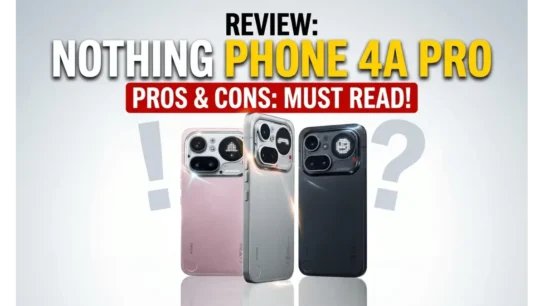
The mid-range smartphone market in India is going through a massive shift. The ₹30,000 price segment we all used to rely on has effectively migrated toward ₹35,000. Launching at ₹31,000 (and sitting around ₹29,000 after retail discounts for the 8GB + 128GB variant), the new Nothing Phone 4A arrives with a heavy burden of proof.
Does it offer a genuine performance leap over the highly popular Nothing Phone 3A, or does it lean too heavily on its unique aesthetic? We put this device through an intense gaming and camera stress test to give you the honest, unfiltered truth.
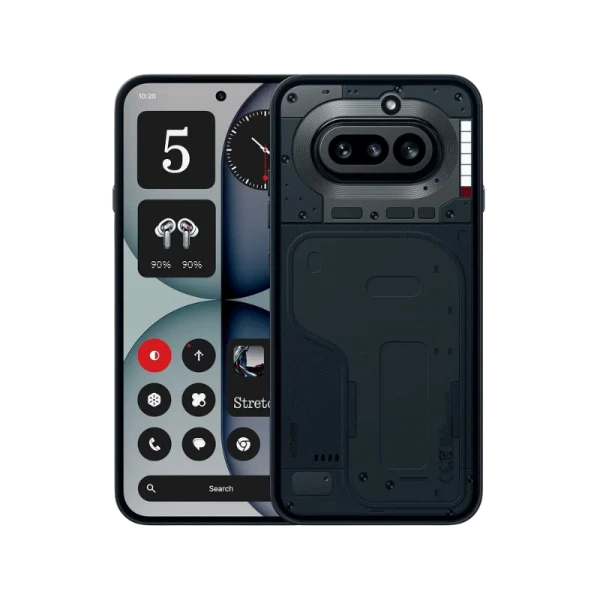
Nothing Phone 4a
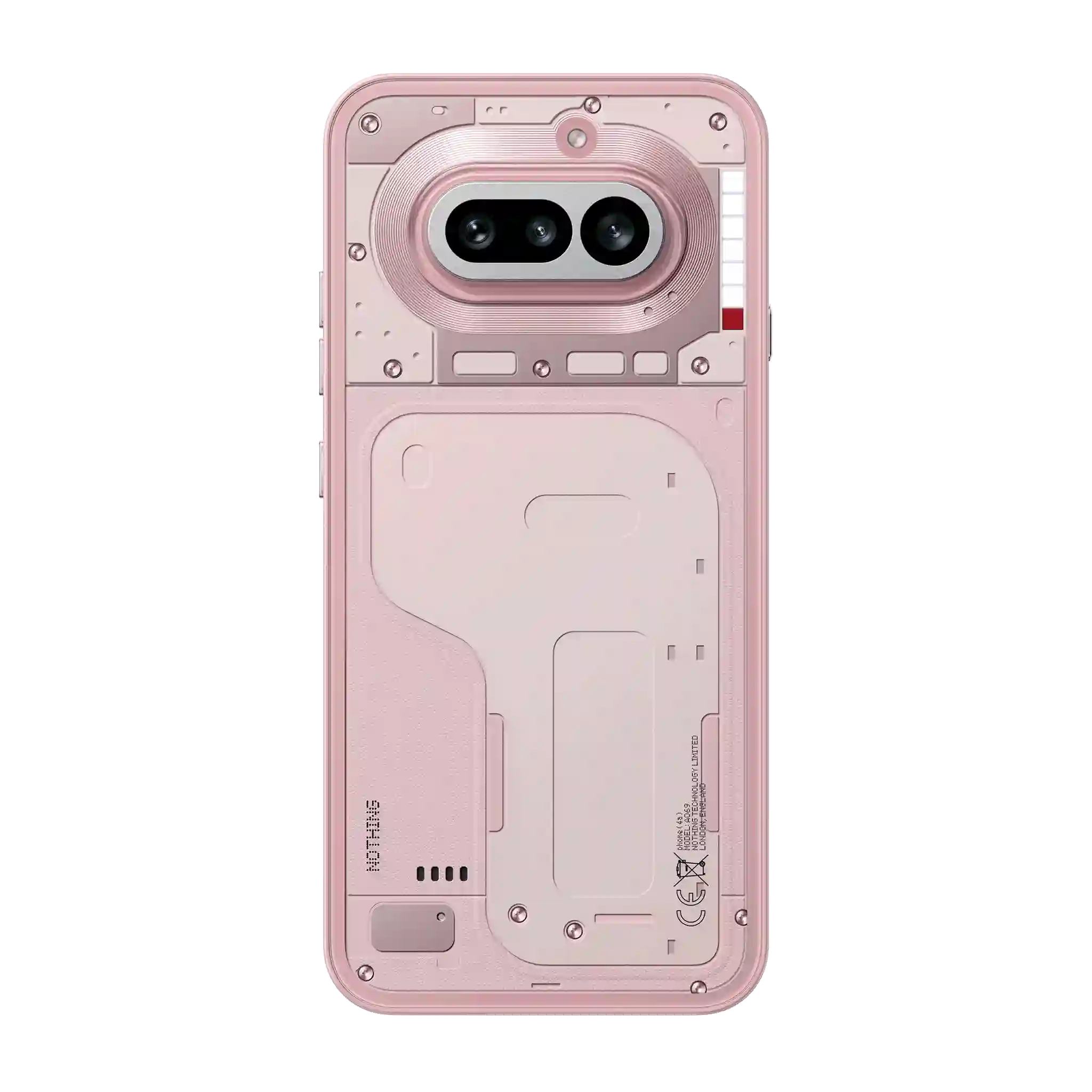
Nothing Phone 4a
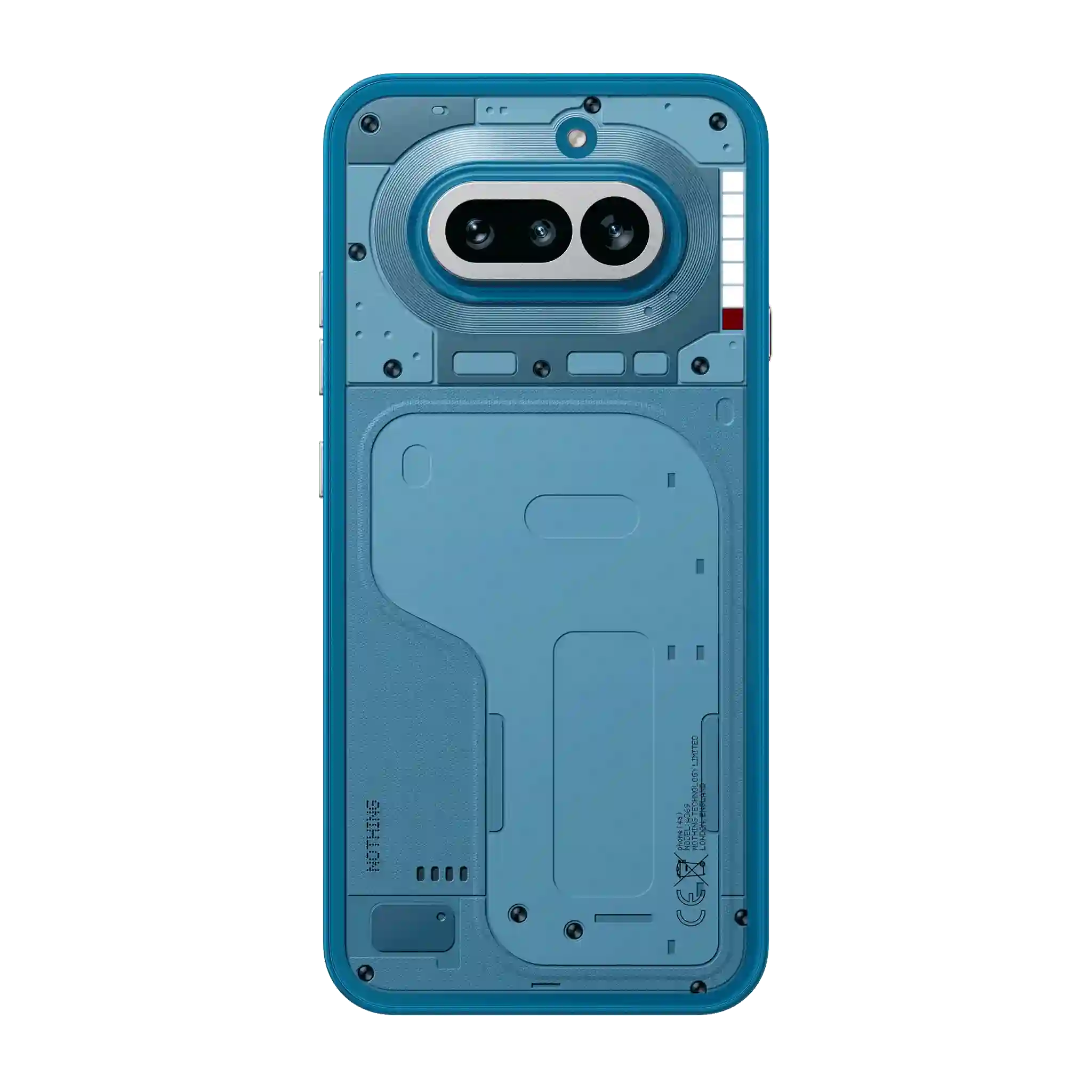
Nothing Phone 4a
Hardware Upgrades: What’s New on Paper?
Before jumping into the real-world metrics, it’s essential to look at the structural changes that Nothing has implemented this year. On paper, the spec sheet shows some highly requested upgrades over the Phone 3A:
- The Processor: Upgraded from the Snapdragon 7s Gen 3 to the newer Qualcomm Snapdragon 7s Gen 4.
- The Storage: A major bottleneck has been cleared by moving from slow UFS 2.2 to UFS 3.1 architecture.
- The Battery: Cell capacity has jumped from 5000mAh to a beefier 5400mAh, though charging remains capped at the same 50W speed.
- Physical Layout Fixes: In a brilliant ergonomic move, Nothing shifted the dedicated AI Button to the opposite side of the frame, stopping users from accidentally hitting it when reaching for the power button.
In-Depth Gaming Test: The 120 FPS Reality Check
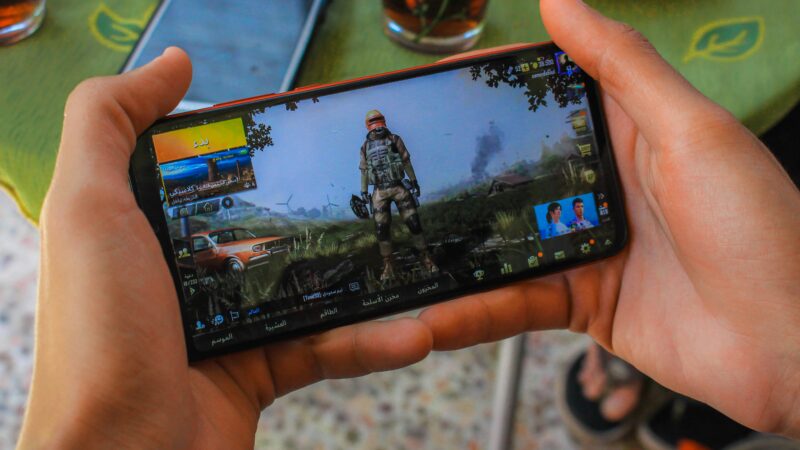
Right out of the box, opening up our test titles revealed that the 120 FPS graphics settings were unlocked from day one. To see if the Snapdragon 7s Gen 4 could actually sustain that target, we engaged Performance Mode, disabled all background efficiency throttling, and hooked up dual FPS meters (one built-in, one external tracking system).
Team Deathmatch (TDM) Performance
When booting into a close-quarters TDM match, the reality of the performance quickly becomes apparent. Despite the 120 FPS option being enabled:
- The phone regularly hovers around 100–104 FPS in active lanes.
- The moment we secured our first kill, the system suffered severe packet drops, causing frames to crater down to 95 FPS.
- After a full 6 minutes of continuous TDM play, the device settled into a sustained average of 90–95 FPS.
On the plus side, the gyroscope sensor functions flawlessly, and the dual stereo speakers (which utilize the top earpiece as a secondary channel instead of a dedicated frame cutout) are incredibly loud and clear. Thermals after TDM remained comfortable, peaking at 38–39°C in a room resting at 29°C.
Erangel Battle Royale Test
Taking the Nothing Phone 4A into a classic Erangel map pushes the silicon significantly harder.
[ Erangel Map Testing FPS Flow ]
  ├── Plane Jump ───────────────────► Drops instantly to 89 FPS (sometimes 66 FPS)
  ├── Ground Looting/Rotation ──────► Fluctuates & stabilizes around 100 FPS
  ├── Hot Drops & Close Combat ─────► Severe drops to 80, 90, 95 FPS
  └── Squad Clashes / Asset Loading ► Heavy choking down to 40–45 FPS
When descending from the plane, frames dropped sharply to 89 FPS, occasionally bottoming out at 66 FPS. While running through open fields, the device tries to claw its way back to 100 FPS, but consistency just isn’t there.
The biggest issue occurs during intense, multi-squad engagements. When multiple enemies push your position and asset rendering spikes, the frame rate plunges down to 40–45 FPS. Interestingly, switching Performance Mode on or off yielded almost identical frame behavior, pointing to a software optimization ceiling rather than a lack of raw hardware capability.
1-Hour Long-Term Gaming Summary
After a continuous gaming session lasting exactly 1 hour and 7 minutes, our software metrics revealed an overall average of 87 FPS.
While the internal system reported a peak external chassis temperature of 41.1°C, localized internal hardware sensors briefly spiked up to 45°C. There is minor localized heating near the processor area, but the phone avoids catastrophic overheating or aggressive thermal throttling.
The battery drain is a bit concerning: starting at a full 100% charge, a single hour of gaming consumed 27% of the battery, leaving us at 73%. While 5400mAh sounds massive, modern competitor devices utilizing silicon-carbon battery chemistry tend to display far better energy efficiency under sustained heavy loads.
Camera Deep Dive: Highs, Lows, and the Telephoto Crown
The rear of the Nothing Phone 4A features a heavily updated triple-camera system. Let’s break down the sensors and how they perform across different environments.
[ Rear Camera Architecture ]
  ├── 50MP Primary (f/1.9 aperture, 1/1.57" sensor size)
  ├── 50MP Telephoto (3.5x Optical Zoom, f/2.9 aperture, 1/2.75" sensor size)
  └── 8MP Ultrawide (f/2.2 aperture, 1/4" sensor size)
Primary & Ultra-Wide Lens Performance
In clean daylight, the 50MP primary camera produces incredibly sharp images that stand out in the sub-₹30,000 category. Colors look beautifully balanced—neither washed out nor artificially oversaturated—making them completely ready for social media posting without editing.
However, the image processing pipeline has distinct quirks:
- Aggressive Contrast: The tuning leans heavily into contrast. This means shadows become incredibly deep and dark, occasionally crushing fine detail in poorly lit parts of a bright scene.
- Cooler White Balance: Photos naturally drift toward a cooler, blueish tint compared to the actual warm lighting of the environment.
- Tricky Backlighting: The Phone 4A struggles significantly in backlit conditions. If your subject is standing in front of a bright sky, the phone fails to balance the dynamic range, leaving the foreground subject noticeably dark.
- Over-Processed Faces: While skin textures and tones look solid under uniform light, tricky lighting causes the camera to overexpose faces, resulting in an artificial, over-processed look.
The 8MP ultra-wide lens delivers a very standard, middle-of-the-road experience. The edges of the frame suffer from noticeable softness, and the overall image can look artificially over-sharpened to make up for the lower resolution sensor. Like the main camera, it struggles in backlit scenarios and aggressive contrast areas.
Low-Light Weaknesses
When the sun goes down, the camera system stumbles. Night shots from the primary sensor lose a lot of their daytime sharpness, producing surprisingly soft details. Because the processing pipeline favors heavy contrast, low-light shadows turn completely black, rendering many dark shots unusable. On a positive note, noise control is excellent, and bright highlights are kept well under control. The ultra-wide camera becomes virtually unusable in low-light situations due to severe detail loss and heavy shadow crushing.
The 3.5x Periscope Telephoto Lens: The True Champion
The saving grace of the Nothing Phone 4A’s camera suite is its dedicated 50MP 3.5x telephoto camera. For a phone priced around ₹30,000 in 2026, this lens is an absolute steal.
            [ 3.5x Optical Zoom vs. 2x Digital Crop ]

   Nothing Phone 4A (Optical)         Competitors (Digital Zoom)
   ┌─────────────────────────┐        ┌─────────────────────────┐
   │ Crisp Textures          │        │ Blurry Edges            │
   │ Natural Blur            │   vs   │ Artifacting             │
   │ 85mm Portrait Aesthetic │        │ Lossy Digital Crop      │
   └─────────────────────────┘        └─────────────────────────┘
In daylight, this sensor produces phenomenal results for both objects and humans. It offers true background compression and a beautiful, natural optical blur that feels like shooting with an 85mm professional lens. Edge detection in portrait mode is remarkably precise, easily going toe-to-toe with phones in the ₹40,000–₹45,000 bracket.
Just keep in mind that its performance drops significantly in low light, where images become visibly desaturated and lose sharpness.
Selfies & Creative Features
The 32MP front camera (f/2.2) is a highly reliable shooter. It captures exceptional facial texture and sharp detail in both front-lit and backlit environments. Rather than using an ugly, aggressive software blur, portrait selfies look natural and clean.
For mobile photographers looking for a distinct style, tapping the arrow below the shutter button opens up custom photography presets like Urban, Cine, and Amber. These presets combine custom focal lengths and unique white balance filters, and you can even import or create your own configurations.
Video Capabilities and Quirks
Video recording presents a mixed bag of premium processing and frustrating resolution limits:
- Primary Camera: Supports 4K at 30 FPS. While the omission of 4K at 60 FPS is disappointing for this price tier, the actual 4K30 footage is highly impressive. Exposure transitions are incredibly fluid when moving across changing light profiles, the white balance stays remarkably accurate, and the built-in stabilization does an elite job of removing walking jitters. The only minor drawback is the same contrast-heavy tuning that darkens shadow areas.
- Ultra-Wide Camera: This module is capped at 1080p resolution. While the colors and highlight controls are processed nicely during the day, the lack of 4K support limits its use for high-end creators, and the small sensor causes severe video noise in low light.
- Telephoto Camera: Capable of shooting true 4K video with zero digital cropping. Handheld walking shots look incredibly stable, exposure shifting is buttery smooth, and unlike the photo mode, the video profile manages a much healthier, less contrast-heavy balance between highlights and shadows.
- Front Selfie Camera: It supports a smooth 60 FPS frame rate, but it is unfortunately capped at 1080p resolution.
The Vlogger’s Bonus: A standout software feature for video creators is the Glyph Recording Light. When enabled, a bright red LED on the back of the phone blinks continuously while recording, letting you or your subject know exactly when the camera is rolling.
Software & Design: The Clean Aesthetic
Beyond the raw benchmarks, Nothing’s biggest competitive advantage remains its hardware design and software experience. The Phone 4A offers an elegant, premium look with its perfectly flat frame, flat display, and flat back panel, giving off a distinct, refined vibe.
The software experience is a breath of fresh air. Nothing UI delivers a pure, stock Android feel that is entirely free of annoying pre-installed bloatware, pushy native ads, or spam notifications. For users who value clean software, this alone makes the phone incredibly compelling.
Comparison: Nothing Phone 4A vs. Nothing Phone 3A
If you currently own a Nothing Phone 3A, the upgrade path isn’t as straightforward as the spec sheet suggests.
While the Phone 4A introduces a faster UFS 3.1 storage drive, a rearranged button layout, and a larger 5400mAh battery, the recent software update unlocking 120 FPS on the older Nothing Phone 3A completely changes things. In our side-by-side performance testing, both devices deliver nearly identical real-world frame rates in gaming. If you are upgrading strictly for raw gaming power, the Phone 4A does not offer a noticeable day-to-day leap over its predecessor.
Pros and Cons
Pros
- Stunning, unique design with flat frames and functional Glyph lighting.
- Clean, ad-free Nothing UI with no annoying bloatware.
- Phenomenal 50MP 3.5x telephoto lens delivering portrait-grade daylight photos.
- Smooth, professional exposure shifting and stabilization in 4K video recording.
- Loud and well-balanced dual stereo speakers.
Cons
- Unstable gaming frame rates, dropping down to 40–45 FPS during intense combat.
- Heavy battery drain during gaming (losing 27% per hour).
- Aggressive, contrast-heavy photo tuning that routinely crushes shadow details.
- Disappointing low-light photography performance on the main and ultra-wide sensors.
- Front camera video and ultra-wide video are strictly limited to 1080p.
Final Verdict: Who Should Buy It?
The Nothing Phone 4A is a beautifully designed, lifestyle-focused daily driver, but it is absolutely not a phone for hardcore gamers. If your goal is holding a locked, competitive 90 or 120 FPS in esports titles, you should save your money or look toward performance-first alternatives like the Poco F7, iQOO Neo 10, Neo 10 Pro, or hold out for the upcoming iQOO Neo 11.
However, if you are a casual gamer who is perfectly happy with a sustained 80–90 FPS experience, and you care far more about owning a clean, ad-free phone with a unique design, great daylight cameras, and an elite portrait zoom lens, the Nothing Phone 4A stands out as one of the most well-rounded lifestyle devices you can buy for under ₹30,000.