Last Updated - May 13, 2026 06:16 pm IST | Dhiraj Singh
The mid-range smartphone market in 2026 is getting more and more illogical, which is great news for consumers. More and more “pro-grade” features are becoming available at lower prices than ever before. The new Motorola Edge 70 Fusion is a great example of this. It seems like this device goes against the usual refresh cycle by giving you big upgrades over the Edge 60 Fusion with almost no downsides.
But because it costs less to launch, it goes head-to-head with last year’s big hit, the Vivo T4 Pro. If you’re looking at your shopping cart and wondering which mid-range phone is best for gaming and taking pictures for a long time, you’re not the only one. After testing, we are here with Motorola Edge 70 Fusion vs Vivo T4 Pro the Ultimate Comparison. Which is the best value for money smartphone in 2026?
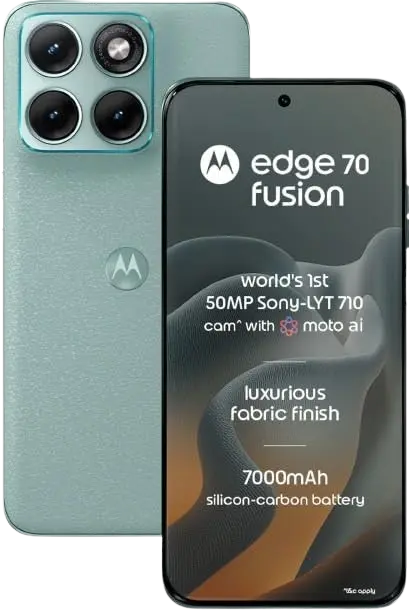
Motorola Edge 70 Fusion
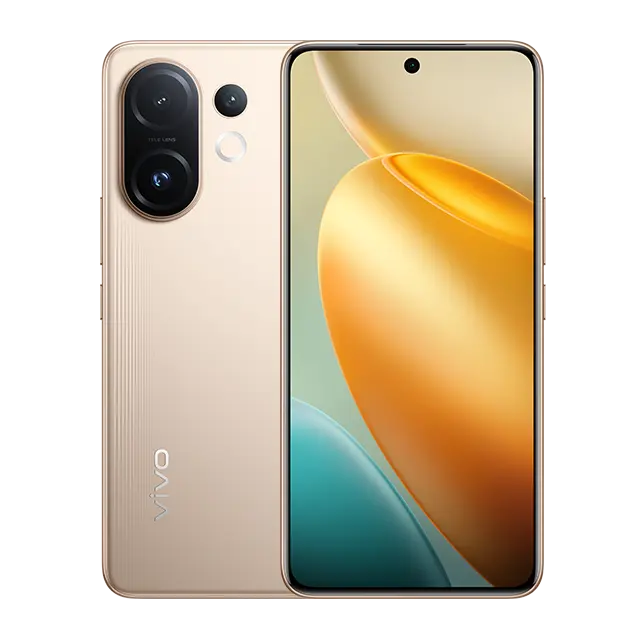
Vivo T4 Pro
Table of Contents
Design and Build: Industrial Chic vs. Classic Minimal
Motorola has leaned heavily into its “Industrial Chic” aesthetic with the Edge 70 Fusion. It maintains the recognizable Edge silhouette but elevates it with premium accents around the camera rings.
What truly sets the Motorola apart is the tactile experience. Available in Pantone Blue Surf, Country Air, and Silhouette, these finishes are fabric-inspired. They don’t just look unique; they provide a superior grip and a warmth that glass or plastic simply can’t match.
In contrast, the Vivo T4 Pro takes inspiration from its flagship sibling, the X200 FE. It’s clean, professional, and simple. However, the back is high-quality plastic. While durable, it lacks the “hand-feel” of Motorola’s textured finish.
Durability Ratings
Both brands have stepped up their game regarding longevity:
- IP Ratings: Both devices boast IP68 and IP69 certification, meaning they can handle high-pressure water jets and full submersion.
- Certifications: Both passed MIL-STD-810H testing for shock and temperature resistance.
- Glass Protection: Vivo uses Diamond Shield glass, while Motorola opts for Corning Gorilla Glass 7i. Both are top-tier, though Gorilla Glass generally holds a slight edge in scratch resistance.
Display and Multimedia: The “Edge” of Entertainment
On paper, Motorola takes the lead in display technology. The Edge 70 Fusion features a 6.78-inch 1.5K AMOLED panel with a blistering 144Hz refresh rate. It’s sharp, fluid, and features Pantone validation for color accuracy.
The Vivo T4 Pro offers a 6.77-inch Full HD+ AMOLED at 120Hz. While the resolution is lower, Vivo actually wins in raw brightness. Whether you’re under direct sunlight or in a bright office, the T4 Pro’s panel is easier to read.
Where the experience diverges:
- Bezels: Motorola has achieved incredibly slim bezels, providing a more immersive “all-screen” feel.
- Audio: The Edge 70 Fusion’s stereo speakers (with Dolby Atmos) are noticeably louder and fuller than the Vivo.
- HDR Content: Interestingly, Vivo supports HDR on both Netflix and YouTube, whereas Motorola is currently limited to YouTube HDR.
Camera Performance: Two Very Different Philosophies
When deciding which is the best mid-range phone for long-term gaming and photography, your choice depends on how you take photos.
The Motorola Approach: Sensor Size & Versatility
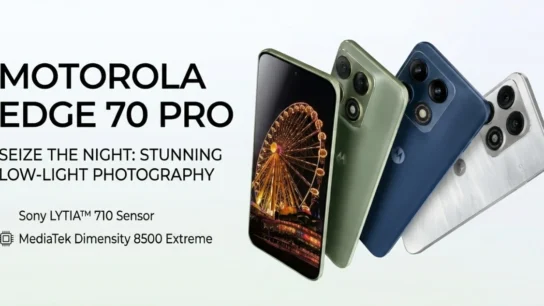
The Edge 70 Fusion is the global debut for the Sony LYTIA 710 primary sensor.
- Daylight: Motorola captures more natural detail and handles textures better than Vivo, which tends to over-sharpen.
- Low Light: This is where the LYTIA sensor shines. Motorola consistently produces brighter images with better detail retention.
- Macro: The 13MP Ultra-wide lens doubles as a macro camera, allowing for impressive close-up shots that the Vivo struggles to match.
The Vivo Approach: Zoom & Selfies
The T4 Pro uses the Sony IMX 882 for both its main and its 3x Periscope Telephoto lens.
- Zoom: Once you go beyond 3x zoom, Vivo wins hands down. If you take a lot of concert or architectural shots, the periscope lens is a game-changer.
- Selfies: Vivo’s 32MP front camera handles skin tones and HDR significantly better than Motorola.
- Portraits: While Motorola’s 1x and 2x portraits are “cleaner,” Vivo’s Natural Mode is superior for accurate human subjects.
Performance: Why Benchmarks Lie
This is the most controversial part of the comparison.
- Vivo T4 Pro: Snapdragon 7 Gen 4 (More powerful SoC) with LPDDR4X RAM and UFS 2.2 storage.
- Motorola Edge 70 Fusion: Snapdragon 7s Gen 4 (Slightly less powerful SoC) with faster LPDDR5X RAM and UFS 3.1 storage.
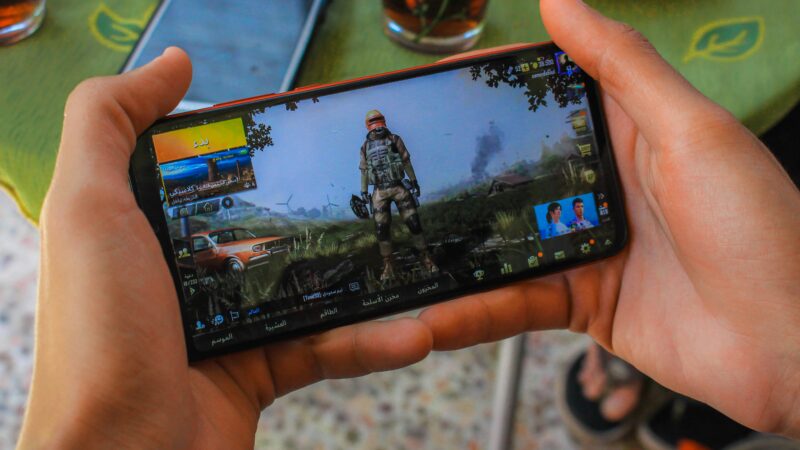
While Vivo wins in synthetic benchmarks (AnTuTu and Geekbench), the real-world gaming story is different. During a 30-minute Genshin Impact session, the Motorola maintained a higher average FPS and ran cooler than the Vivo.
This suggests that Motorola’s faster RAM/Storage combo and software optimization are more effective than Vivo’s raw processor power. For those asking which is the best mid-range phone for long-term gaming, the Edge 70 Fusion surprisingly takes the trophy for sustained, stable performance.
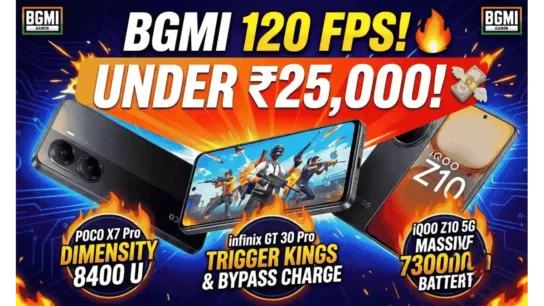
If you’re looking to purchase a device that supports 120 FPS for under ₹25,000, check out the options available. 👉 BGMI 120 FPS Phone
Battery and Charging
We are seeing massive batteries in slim chassis this year.
- Vivo T4 Pro: 6,500 mAh battery with 90W charging (0-100% in ~55 mins).
- Motorola Edge 70 Fusion: 7,000 mAh battery with 68W charging (0-100% in ~65 mins).
While Vivo charges faster, Motorola lasts longer. In our standard loop test, the Edge 70 Fusion provided significantly better Screen-on-Time (SoC). If you are a “two-day battery” seeker, Motorola is the clear winner.
Software and Ecosystem
It’s a battle of philosophies: Hello UI (Moto) vs. Origin OS (Vivo).
- Motorola: Offers a “clean” Android experience. It’s nearly bloatware-free and packed with useful AI tools like Next Move, Smart Connect (for PC linking), and Perplexity integration.
- Vivo: Origin OS is more “snappy” with fluid animations and the helpful Origin Island. However, it comes with more pre-installed apps and requires some effort to disable notifications from the V-Appstore.
Updates: Both brands are competitive here. Vivo offers 4+6 years (3+6 remaining), and Motorola offers 3+5 years.
Comparison
| Feature | Motorola Edge 70 Fusion | Vivo T4 Pro |
|---|---|---|
| Primary Sensor | Sony LYTIA 710 (New for 2026) | Sony IMX 882 |
| Specialty Lens | 13MP Ultra-wide/Macro | 50MP 3x Periscope Telephoto |
| Gaming Performance | Higher sustained FPS (Thermal efficiency) | Higher peak benchmarks (Raw power) |
| Battery & Charging | 7,000 mAh / 68W | 6,500 mAh / 90W |
| Software Experience | Clean Hello UI + Perplexity AI | Origin OS (Feature-rich, slight bloat) |
| Durability | IP68/69 + Gorilla Glass 7i | IP68/69 + Diamond Shield |
Pros and Cons
Motorola Edge 70 Fusion
- Pros: * Incredible battery endurance with the 7,000 mAh silicon-carbon cell.
- Better thermal management during long gaming sessions.
- Clean, ad-free software experience with smart AI integrations.
- Superior low-light photography thanks to the LYTIA sensor.
- Cons:
- Lacks a dedicated telephoto lens for long-range zoom.
- Charging speed is “slow” (68W) compared to the 90W+ market standards.
Vivo T4 Pro
- Pros:
- Unrivaled zoom capabilities in this price bracket.
- Beautiful, bright display that handles outdoor glare better.
- Faster 90W charging for quick top-ups.
- Excellent selfie processing and HDR handling.
- Cons:
- Outdated UFS 2.2 storage slows down app opening times.
- Software includes significant pre-installed bloatware.
- Tends to throttle performance more than the Moto during heavy gaming.
The Verdict: Which is the best value for money smartphone in 2026?
Choose the Motorola Edge 70 Fusion if…
You are a power user who prioritizes stability. If you play games like Genshin Impact for hours, want a battery that comfortably lasts two days, and prefer a clean Android interface, this is the best mid-range phone for long-term gaming and photography for you. Its superior thermal efficiency and faster storage (UFS 3.1) make it feel like a newer device than it is.
Choose the Vivo T4 Pro if…
You are a social media creator or a concert-goer. The 3x periscope lens and the superior front-facing camera make this a content creation powerhouse. While the internal storage is slower, the raw peak power of the Snapdragon 7 Gen 4 is great for short bursts of high-intensity tasks.
FAQ – Motorola Edge 70 Fusion vs Vivo T4 Pro The Ultimate Comparison
Q: Is 68W charging too slow for a 7,000 mAh battery?
A: While it takes about 65 minutes for a full charge, the trade-off is the sheer capacity. You won’t need to plug in as often, which preserves the long-term health of the silicon-carbon battery.
Q: Does the Motorola Edge 70 Fusion support 5G in all regions?
A: Yes, both phones support a wide range of sub-6GHz 5G bands, though Motorola showed slightly better signal stability in our testing in low-coverage areas.
Q: Can the Vivo T4 Pro play games at 120FPS?
A: While the screen supports 120Hz, the Snapdragon 7 Gen 4 typically hits 60–90 FPS in high-end titles. However, it can reach 120FPS in optimized e-sports titles like Wild Rift or PUBG.